Your ICP Is Clear. Now What? Sculpting Your Ideal Customer Profile for Scalable Innovation
The $250 Million Mistake: No clear ICP
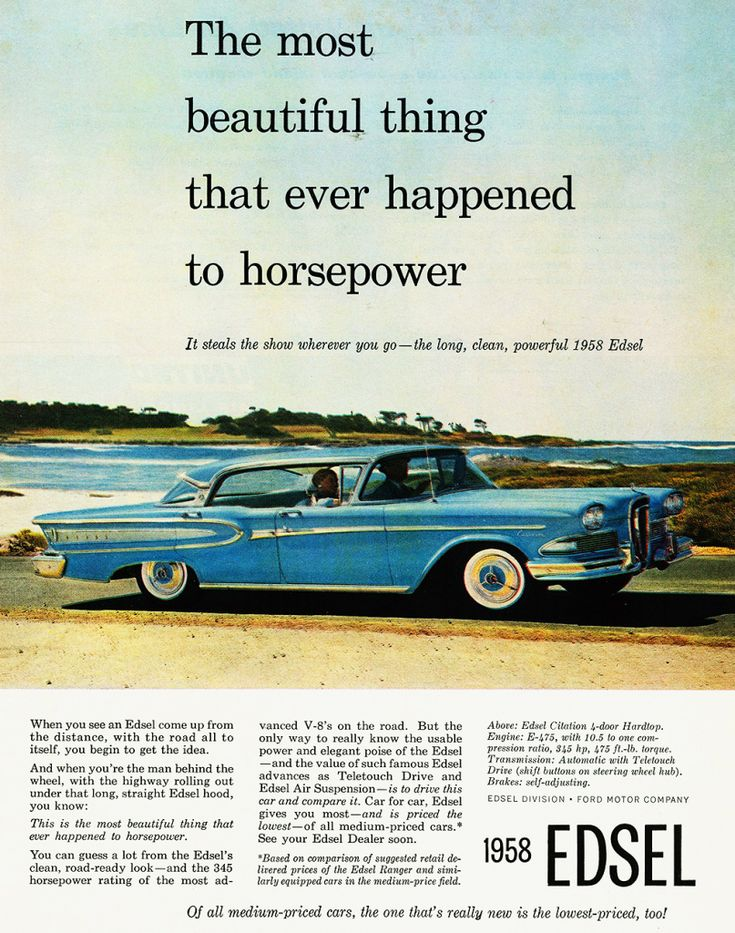
In 1958, the Ford Motor Company released the Edsel. It was a car designed for everyone and, ultimately, for no one. It was too expensive for the budget-conscious, yet lacked the prestige required for luxury buyers. The styling didn’t resonate, and the value proposition was “stuck in the middle.”
By the time the dust settled, Ford had lost an estimated $250 million – a huge amount for the era. Contrast that with BMW’s relaunch of the Mini Cooper in 2001. BMW didn’t try to build a family car or a long-distance cruiser. They locked onto a hyper-specific Ideal Customer Profile (ICP): urban drivers who valued style, personality, and city-agility over size or practicality.
By leaning into being “small but cool” rather than “small but cheap,” they secured consistent sales of up to 350,000 units annually, generating billions in revenue.
As Dave Ruane noted during our latest Elevate Innovate session, the difference between these two outcomes wasn’t just engineering – it was market positioning clarity.
For many technology leaders today, the challenge isn’t finding a market; it’s staying disciplined enough to serve the right market. When a founder with an extraordinary vision starts gaining traction, it is easy to get swept away by the momentum.
As Olga Blasco observed: “It’s very easy to get carried away by the boost, and make assumptions that you really understand their problems, but before luck, before momentum, before your own ambition, before contracts push you forward – you need to ask yourself if that endgame is clear.”
Navigating the VUCA Sea: Anchors in a World of Chaos
We are currently operating in what military planners call a VUCA environment: Volatile, Uncertain, Complex, and Ambiguous. When Blackbird.io launched in late 2021, the world looked radically different. There was no ChatGPT. The “vibe coding” revolution hadn’t yet begun.
Startups were hiring at a feverish pace, and SaaS valuations were soaring at 20x revenue. Within two years, the trend reversed: IT employment dipped below pre-pandemic levels, and valuations for many SaaS ventures collapsed to 6-8x revenue.
In such a world, traditional 5-year plans tend to be obsolete. Instead, leaders need “North Stars” to stay grounded.
“If you’re an entrepreneur, if you decide to build a startup, you cannot chart your path forward fully. You cannot have certainty. So, I think we have to have a mindset, and also a culture to accept VUCA.”
– Bruno Bitter
The Sculptor’s Strategy: ICP as a Process of Subtraction
Most leaders view growth as always adding things – adding more features, more segments, and more leads. However, Bruno Bitter offers a counter-intuitive perspective: Defining your ICP is an act of subtraction.
He compares the process to an artist working with clay rather than a painter with a canvas. A painter adds layers; a sculptor takes things away until the final form is revealed.
“ICP is a process like that, you start taking away things. Taking away segments that are not that relevant, product ideas that are not that immediate.”
– Bruno Bitter

This subtraction results in clarity. When you move from speculative ideas to a clear understanding of who is – and isn’t – interested in your solution, you gain the ability to build repeatable processes. You move from the “chaos” of the early stage to the “maturity journey” of a scalable business.
The Discipline of “No”: Why Disqualification is Growth
One of the eye’opening insights from the session is that a strong ICP isn’t just about who you talk to – it’s about who you ignore. In the pursuit of scale, the temptation to chase “marquee” customers be it a Microsoft or a Google is immense. However, if those giants have two-year buying cycles and your startup needs growth now, they are not your ICP. They are “shiny objects” that can sink your innovation velocity.
Olga Blasco highlighted this essential shift in mindset: “Disqualification is more important than qualification. If we’re saying yes to all of these people, it means that we might have to say no to all these others, or at least not make them a priority.”
By disqualifying prospects that are too small (no budget) or too large (bureaucratic drag), you protect your team’s most valuable resource: bandwidth.
The “Power Move”: Why Clarity Equals Velocity
There is a common misconception that taking the time to “pause” and reflect on ICP clarity will slow a company down. Olga Blasco argues the exact opposite.
“That pause to really reflect on this and make the right decisions it’s not gonna slow you down. It’s actually a power move, because it allows you to move faster later. Once you have that level of clarity, then you can move faster later, and get into that way of working where you are not constantly debating, is this the right customer or not?”
– Olga Blasco
When a team is aligned on a clear ICP, a “vibration” occurs. You no longer waste hours in meetings debating lead quality. The entire organization – from sales to engineering – instinctively recognizes when an opportunity is “real and aligned.” This alignment is what transforms sustainable growth into profitable scale.
Beyond Hard Attributes: The Soft Side of ICP
When defining your ICP, don’t stop at “hard” attributes like geography or company size. Bruno Bitter revealed that Blackbird.io’s most successful customers share specific cultural or “soft” attributes:
- Strategic Alignment: They don’t view localization or technology as a “shared service” or a back-office function. It is embedded in their DNA.
- Cross-Functional Empowerment: They work in teams where analysts, linguists, and engineers collaborate without hierarchy.
- Process Innovation Culture: They have a strong sense of ownership over changing and improving their own internal workflows.
These companies don’t just buy technology; they seek strategic partners. They are the “lookalikes” that allow a company to double down on scale once the initial pattern is identified.
Innovation 2.0: Balancing Kaizen and Kaikaku
Scaling on a clear ICP foundation doesn’t mean the end of innovation – it means the beginning of intentional innovation. Bruno Bitter uses two Japanese concepts to describe this balance:
- Kaizen: Continuous, incremental improvement. This is the “grunt work” of moving a feature from 90% to 100% based on customer feedback.
- Kaikaku: Disruptive, radical innovation. This is the bold leap into new technological frontiers.
A clear ICP helps you find a healthy balance between the two. It ensures that even your most disruptive innovations are grounded in solving real problems for your most valuable users.
The Human Element in the Age of Automation
As we look toward the future of the localization and technology landscape, the “Ying and Yang” of human talent and AI automation will define the winners. The most successful organizations won’t see technology as a zero-sum game against humans. Instead, they will use orchestration platforms like Blackbird.io to elevate their people to higher-value roles.
As Olga Blasco concluded: “Holistic changes that organizations need to embrace, take their time and take their course. And I think that it’s up to us to influence things to go in the right direction and stay level-headed and share as much knowledge as we can.”
The Road Ahead: Is Your Foundation Ready?
Scaling innovation is not about how fast you can run; it’s about how clearly you can see where you are going. If you are still chasing “shiny objects” or debating every new lead, it’s time to make the “power move.” Seek your ICP clarity with all your might, and build your growth on a foundation that can withstand the VUCA world.
Ready to dive deeper into these strategies?
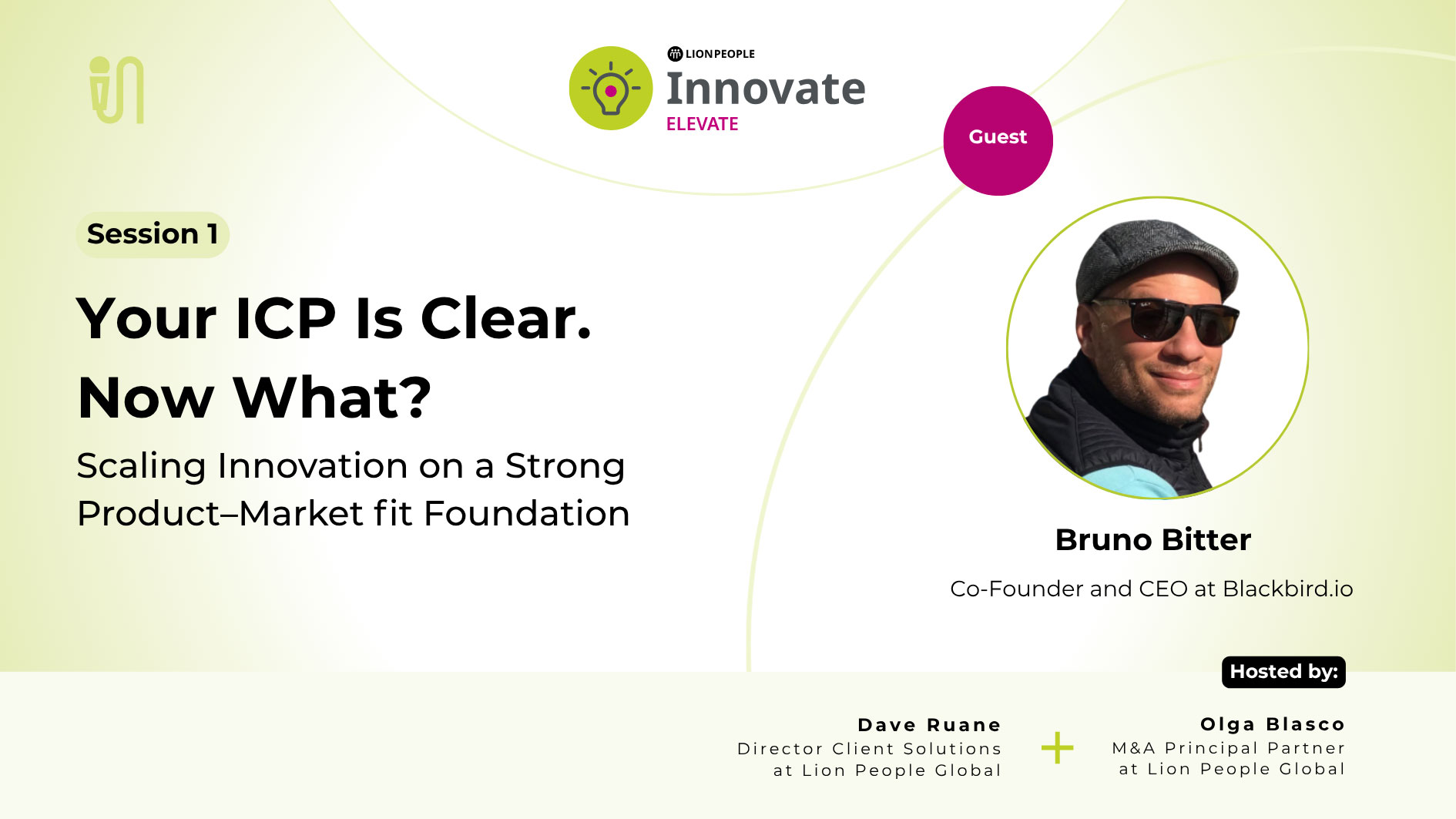
Most leaders are still guessing. In this session, Bruno Bitter and the Lion People Global team show what clarity actually looks like in practice – especially through the “Sculptor” lens and “vibe coding.” This is the kind of insight you don’t want to miss.
Watch the full session here and learn how to turn your ICP clarity into a scalable engine for innovation.
What is your “Power Move” for the next quarter? Join the conversation in the comments below!