From Headcount to Capability Language Services & Language Technology Hiring Outlook for 2026
CEO Perspective
As Founder and CEO of Lion People Global, I spend every week in conversation with CEOs, founders, and senior leaders across language services, language technology, and AI-enabled content organisations. Over the past 18 months, the tone of those conversations has shifted markedly.
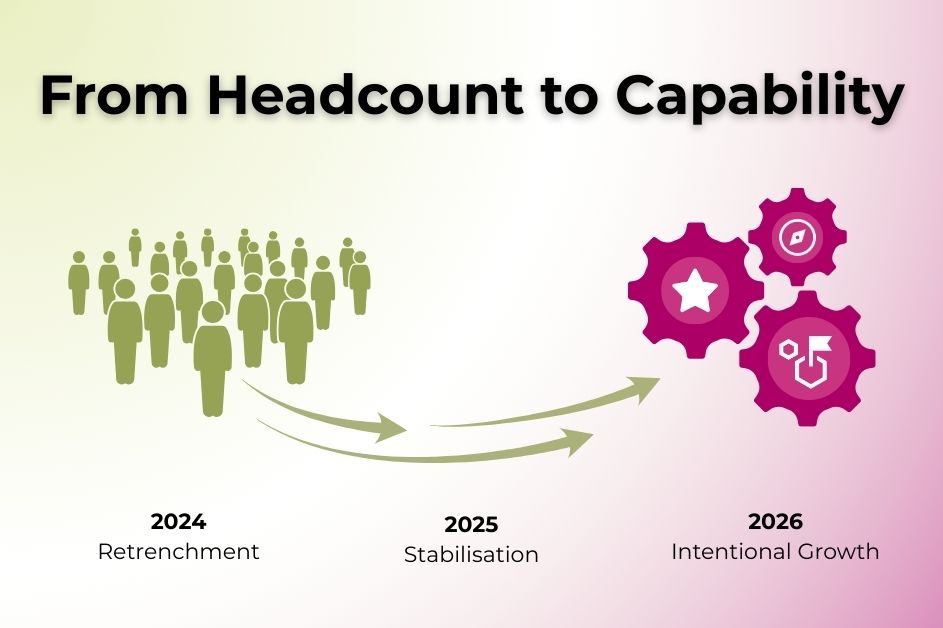
In 2025, the focus was caution. Leaders were centred on stabilising teams, protecting margins, and recalibrating operating models as AI advanced faster than most organisations anticipated. As we move toward 2026, the discussion has matured.
The prevailing question is no longer about survival or scale for scale’s sake. It is this:
How do we build the right leadership and capability for an AI-enabled, globally distributed future without relying on outdated hiring models?
This shift came through clearly in our Elevate Talent leadership series. Conversations with Paul Carr, CEO of Welocalize, Bertrand Gstalder, CEO of Acolad Group, Simon Yoxon‑Grant, President and CEO of LanguageLine Solutions, and Benjamin Faes, CEO of RWS, consistently reinforced the same message: future-ready organisations will be defined not by headcount growth, but by clarity of leadership, culture, and capability.
This outlook reflects what we are seeing first-hand across hiring, advisory, and M&A engagements. It is not about returning to previous growth cycles. It is about hiring with intent.
2025 in Review: What Actually Happened
Hiring Stabilised, But Did Not Rebound
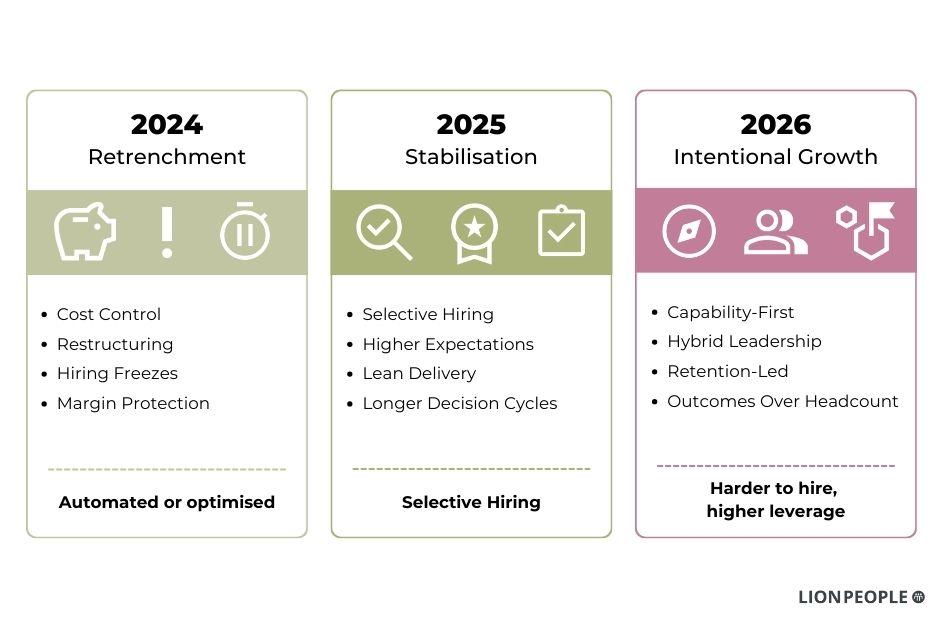
After widespread restructuring in 2023 and 2024, 2025 became a year of stabilisation rather than recovery. Hiring freezes eased, but expansion remained selective. Language services providers continued to operate lean delivery models, while language technology companies focused on enterprise adoption, product maturity, and financial discipline.
Across Elevate Talent discussions, leaders repeatedly emphasised that hiring decisions were no longer driven by ambition alone. Simon Yoxon‑Grant, LanguageLine Solutions CEO, spoke to the importance of maintaining service quality, resilience, and accessibility while scaling responsibly highlighting that growth without capability ultimately erodes trust.
The result: fewer roles, higher expectations, and longer decision cycles.
AI Changed Roles Faster Than Org Charts
Generative AI did not remove the need for people but it fundamentally reshaped what effective roles look like.
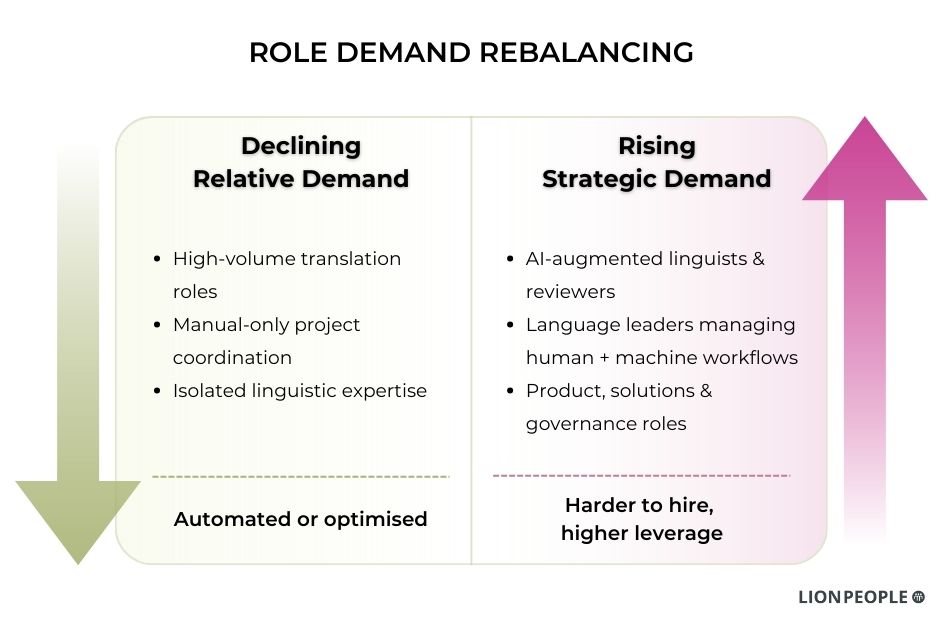
Across 2025, demand declined for:
- High-volume, low-complexity translation roles
- Manual-only project coordination
- Isolated linguistic expertise without domain or technology context
At the same time, demand increased for:
- AI-augmented linguists and reviewers
- Language leaders managing human and machine workflows
- Product, solutions, and customer teams fluent in localisation, AI, and enterprise delivery
During Elevate Talent sessions, Bertrand Gstalder, Acolad CEO consistently emphasised that AI is an amplifier of human capability, not a replacement. Competitive advantage, he noted, will come from organisations that invest in judgement, cultural intelligence, and leadership alongside technology.
Hybrid Talent Became the Constraint
One of the most persistent hiring challenges in 2025 was not access to talent, but access to the right combination of skills.
Organisations struggled to find professionals who combined:
- Language or localisation expertise
- Technical or AI fluency
- Commercial awareness and leadership capability
Paul Carr, Welocalize CEO highlighted that as organisations adopt more hybrid and distributed operating models, leadership, communication, and cultural alignment become critical differentiators. This scarcity of hybrid profiles extended hiring timelines and accelerated interest in fractional and contract-based talent models.
Hiring Shifted from Cost Centre to Growth Lever
In organisations that navigated 2025 well, hiring discussions shifted away from cost containment and toward growth enablement.
Talent investment increasingly focused on:
- Leadership roles that shape culture and execution
- Customer-facing and solutions roles that accelerate enterprise adoption
- Capability gaps that block innovation or scale
Benjamin Faes, RWS CEO reinforced this perspective, noting that talent strategy must align directly with global delivery models, technology roadmaps, and long-term client value creation particularly as client expectations continue to rise.
Why 2026 Will Look Different
Several structural forces are now converging:
- AI adoption has moved from experimentation to embedded infrastructure
- Enterprise buyers are more outcome-driven and less tolerant of inefficiency
- Boards and investors are demanding both growth and operational discipline
- Talent is more cautious, but far more selective about where it commits
Together, these forces point to a more confident but significantly more intentional hiring environment in 2026.
2026 Hiring Predictions
Hybrid Roles Will Define the Market
Pure language roles will continue to decline in relative importance. Demand will concentrate around professionals operating at the intersection of language, technology, and business strategy.
High-priority profiles will include:
- AI-enabled localisation specialists
- Language data, quality, and governance leaders
- Product managers with global content responsibility
- Solutions and implementation leaders for multilingual platforms
These roles will be fewer in number, broader in scope, and materially harder to fill.
Language Technology Hiring Will Outpace Services
Language technology organisations with clear enterprise value propositions will lead hiring momentum in 2026.
Growth roles will cluster around:
- Product and engineering (AI, NLP, workflow automation)
- Customer success and enterprise implementation
- Solutions architecture and go-to-market leadership
Language services providers will continue to hire cautiously, prioritising leadership strength, vertical expertise, and delivery excellence over operational scale.
Commodity Translation Hiring Will Remain Constrained
While the volume of multilingual content continues to grow, delivery models have permanently shifted.
Human expertise will increasingly focus on:
- Oversight, quality, and risk management
- Regulated, accessibility, and compliance-driven content
- High-impact brand, marketing, and creative work
Routine production roles will remain automated or highly optimised.
Flexible and Fractional Models Will Become Standard
2026 will see broader adoption of:
- Fractional leadership across product, AI, localisation, and go-to-market
- Contract and project-based specialists
- Embedded external teams operating as internal capability
This reflects both talent preference and employer risk management and mirrors how modern organisations are choosing to scale responsibly.
Retention Will Matter More Than Hiring
The strongest talent in the market is not actively searching it is assessing leadership quality, clarity of direction, and organisational purpose.
Winning organisations will:
- Communicate strategy clearly and consistently
- Provide exposure to meaningful global and AI-led initiatives
- Invest in capability development rather than role churn
Hiring will remain competitive. Retention will be decisive.
Voices from Elevate Talent
Insights from the Elevate Talent series consistently reinforced that 2026 hiring decisions must be grounded in leadership clarity, capability, and long-term value creation. Below are perspectives shared by CEOs who joined these conversations.
Paul Carr, CEO, Welocalize
“As operating models become more hybrid and distributed, the roles that matter most are those that strengthen culture, leadership, and execution. Hiring for technical skill alone is no longer enough; alignment and adaptability are what sustain growth.”
Bertrand Gstalder, CEO, Acolad Group
“AI will not replace people, but it will fundamentally change what great talent looks like. Organisations that invest in human judgement, cultural intelligence, and leadership alongside technology will be the ones that differentiate.”
Simon Yoxon-Grant, President & CEO, LanguageLine Solutions
“Growth without resilience puts service quality and trust at risk. The organisations that succeed will be those that scale responsibly, with the right leadership and capability in place to support accessibility and consistency.”
Benjamin Faes, CEO RWS
“Talent strategy must be directly aligned to global delivery models and technology roadmaps. Hiring decisions that are disconnected from long-term client value will not hold up in a more demanding market.”
What This Means for Leaders
As organisations plan for 2026, the critical question is no longer how many roles to add, but which capabilities will define future competitiveness.
The most effective talent strategies will:
- Hire fewer people, more intentionally
- Prioritise leadership and hybrid capability
- Align talent decisions directly with business outcomes
Insights from Elevate Talent reinforce this reality: clarity, culture, and capability now outweigh speed and scale.
Closing Thought
2026 will not be defined by headcount growth. It will be defined by strategic capability.
Many organisations are recognising that no single hiring model can support every stage of growth. Leadership roles, specialist capability, and ongoing scale require different approaches and forcing them into one model creates friction.
This is why Lion People Global operates a Talent Orchestra across:
- RecruitFlow: for ongoing, always-on hiring at scale
- Strategic Hire: for specialised and time-sensitive roles
- Executive Search: for senior, confidential, and leadership appointments
Together, these models allow organisations to build capability with intent, aligning the right hiring approach to the right business need, at the right time.
If you are reviewing your 2026 talent strategy, planning for growth or transformation, or reassessing how you hire leadership and specialist capability, we would welcome a conversation.
Lion People Global supports organisations navigating talent, growth, and transformation across the language services and language technology ecosystem.